








Key Takeaways
- SAP end-to-end testing validates complete business outcomes across modules and systems, this way ensuring processes work in production.
- Vertical testing proves process work within one system, while horizontal testing validates workflows across multiple integrated systems and external services.
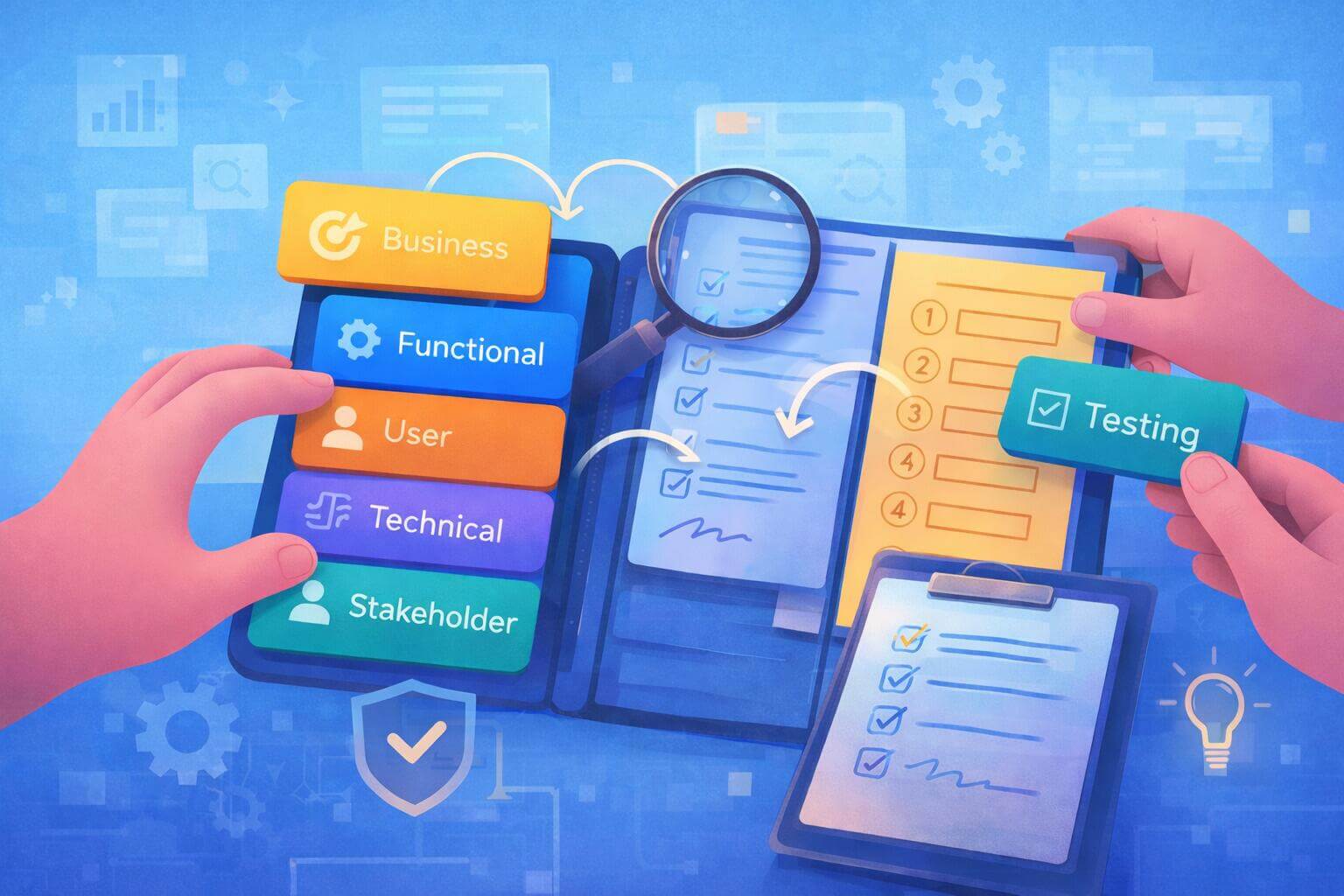
- Effective E2E testing requires four building blocks: vertical and horizontal approaches, clear scope definition, engaged stakeholders, and test data management.
- Service virtualization enables earlier testing by simulating unavailable dependencies like payment gateways to reduce friction from unstable third-party systems.
SAP and ERP environments are progressing fast and getting more updates and integrations. That’s exactly why teams may miss critical integration failures. Learn how to build a SAP testing strategy that validates business processes end-to-end 👇
The Necessity of End-to-End Testing in SAP
SAP end-to-end testing exists because business reality doesn’t respect module boundaries. Your finance team doesn’t care that SD and FI are separate modules. They care that when sales processes an order, revenue hits the right accounts. E2E testing validates these business expectations in environments that mirror production complexity.
Three factors make E2E testing non-negotiable in modern SAP and ERP programs:
Factor 1: Integration complexity
You’re managing not just SAP modules talking to each other. SAP connects to CRM systems, e-commerce platforms, logistics providers, payment gateways, and compliance services. Each integration point presents a potential failure mode. Your tax service goes down, your bank interface returns unexpected formats, or your warehouse system processes deliveries but doesn’t update inventory back to S/4HANA. These failures only appear during horizontal testing across the full ecosystem.
Common integration points requiring E2E validation:
- External tax calculation and e-invoicing providers
- Payment gateways and banking interfaces
- Third-party logistics and warehouse management systems
- Identity providers and authentication services
Factor 2: Velocity of change
S/4HANA Cloud environments get quarterly releases. On-premise systems receive support packs regularly. ERP migration projects from legacy systems introduce wholesale changes requiring comprehensive validation. Each change introduces regression risk. Did that new Fiori app break your approval workflow? Does the latest support pack change pricing calculations? Organizations that skip regression E2E testing discover defects in production, where fixing costs exponentially more.
Factor 3: Audit and compliance pressure
Industries like life sciences, financial services, and manufacturing face regulatory issues. FDA validation requirements, SOX controls, and GxP compliance demand documented evidence that systems work as intended. You need traceability showing requirements were tested, results were captured, and defects were resolved.
During SAP implementations and ERP migrations from Oracle or Microsoft Dynamics, SAP e2e testing becomes even more critical. You’re proving that years of business logic and custom developments still work in the new environment. Data migration quality, interface compatibility, and performance under production-like loads all need validation through comprehensive E2E scenarios.
Key migration validation areas:
- Data migration accuracy and completeness reconciliation
- Interface compatibility with existing and new systems
- Performance benchmarks under production-like transaction volumes
- Custom code functionality in the new environment
Organizations that don’t invest enough face stabilization periods and expensive post-go-live fixes.
Managing SAP end-to-end testing across vertical and horizontal flows requires more than spreadsheets and scattered test cases. You need a platform that organizes tests around complete business processes rather than isolated modules. aqua cloud, an AI-powered test and requirement management platform, lets you structure E2E testing exactly as outlined in this guide. The nested test case feature allows you to build reusable components for common SAP transactions, such as order creation or invoice posting, which you can reference across multiple E2E scenarios. This dramatically cuts maintenance overhead when SAP updates roll out. aqua’s domain-trained AI Copilot generates test cases directly from your SAP documentation and understands your specific configuration. Beyond test management, aqua provides the traceability and evidence management that auditors expect, making it ideal for regulated industries requiring documented SAP validation. aqua integrates seamlessly with Jira, Azure DevOps, Jenkins, and other tools in your SAP ecosystem.
Boost your testing efficiency by 80% with aqua's AI
Understanding the Building Blocks of SAP Testing
Effective SAP end-to-end testing rests on four foundational building blocks. Understanding these building blocks helps organizations structure their testing approach, whether implementing new SAP systems or migrating from other ERPs. Each building block addresses specific aspects of the testing challenge. Weakness in any one area typically shows up as E2E instability, slow cycles, or poor auditability.
Building Block 1: Vertical and Horizontal Testing Approaches
- Vertical E2E testing validates depth within a single system, proving complete process slices work through the technology stack from UI to database
- Horizontal E2E testing validates breadth across your entire ecosystem, testing complete business processes spanning multiple systems and interfaces
- Horizontal testing becomes dramatically more reliable when you’ve validated interfaces individually and completed vertical testing first
Building Block 2: Scope and Approach Definition
- Risk-based prioritization identifies which business processes, scenarios, and integrations will be tested during E2E cycles
- Explicit boundaries define what’s in-scope versus out-of-scope to prevent scope creep
- SAP Quality Risk Analysis provides a framework to prioritize where to invest E2E effort based on business impact and technical complexity
Building Block 3: Stakeholder Engagement and Ownership
- Defined roles establish clear responsibilities spanning business process owners, key users, test managers, consultants, developers, and operations
- Shared rituals include daily defect triage, weekly quality gates, and co-definition of critical user journeys
- Decision authority provides clear accountability for go/no-go decisions and acceptance criteria
Building Block 4: Test Data Management and Environment Stability
- Master data completeness ensures business partners, materials, pricing, and tax data exist across all systems
- Data repeatability creates reset mechanisms to run tests multiple times without data pollution
- Environment discipline prevents unplanned refreshes and transport conflicts that disrupt testing
If you struggle with E2E testing, the root cause usually traces to weakness in one of these foundational areas. Developing effective test strategies requires attention to all four building blocks simultaneously.
Vertical End-to-End Testing
Vertical E2E testing proves that individual business process slices work completely through your SAP technology stack. You’re validating specific scenarios from the user interface through business logic and configuration down to database postings. This typically stays within one system boundary.
Think of vertical testing as going deep rather than wide. You select a critical business flow and test it thoroughly within its natural boundaries:
Finance vertical scenarios:
- Month-end close process validates journal entries, allocations, and financial statement generation within FI/CO
- Accounts payable cycle tests invoice receipt, three-way matching, payment processing, and GL postings
- Asset accounting verifies asset acquisition, depreciation runs, and integration with the general ledger
Supply chain vertical scenarios:
- Procure-to-pay covers purchase requisition through PO creation, goods receipt, and invoice verification in MM
- Order-to-cash includes the quote-to-order process with pricing, availability checks, credit verification, and order confirmation in SD
- Inventory management validates goods movements, stock transfers, and physical inventory within warehouse management
Human resources vertical scenarios:
- Hire-to-retire tests employee onboarding, organizational assignment, and master data creation
- Payroll processing verifies time data integration, wage calculation, and posting to FI
- Benefits administration covers enrollment processing and deduction management
Vertical E2E testing validates configuration correctness, authorization design, and data flow simultaneously. Does your pricing procedure pull the right condition types? Can the purchasing clerk create requisitions but not approve POs? When you create a sales order, do material and inventory records update properly?
Your vertical scenarios should represent real business usage. Include exception handling, like customer orders exceeding credit limits or insufficient inventory scenarios. Test boundary conditions such as maximum order quantities and special pricing agreements. Test different organizational units, like multiple company codes or plants. Each variation can expose configuration weaknesses that only surface under specific conditions.
During ERP migrations from Oracle or Microsoft Dynamics to SAP, vertical testing validates that business logic has been translated correctly. The timing matters because it happens during system integration testing after unit testing and configuration validation. Vertical testing also serves as your foundation for regression automation. Learn more about comprehensive SAP test automation approaches.
Horizontal End-to-End Testing
Horizontal E2E testing validates your complete business ecosystem. You’re testing scenarios that flow across multiple systems, interfaces, organizational boundaries, and technologies. A single horizontal scenario might touch SAP S/4HANA for order management, a warehouse system for fulfillment, an external tax service for e-invoicing, and a payment gateway for transactions.
Critical challenges in horizontal testing:
- Data synchronization issues mean customer masters must exist in both CRM and S/4HANA with matching IDs, while material masters need consistent codes across ERP and warehouse systems
- Interface reliability problems occur when RFC connections drop, OData services fail authentication, or external tax services become temporarily unavailable
- Timing and orchestration complexity arise from asynchronous messaging that creates delays where payment confirmations arrive minutes or hours after transactions
- Authorization misalignment happens when users have proper permissions in SAP but lack corresponding access in the warehouse or CRM systems
- Precondition dependencies require completed sales that have been posted across all systems before you can test return processes
Best practices for horizontal testing:
Practice 1: Sequence testing properly
Test each interface individually first with known-good payloads. Validate vertical flows within each participating system. Only then attempt full horizontal orchestration. This approach dramatically reduces troubleshooting time because you’ve eliminated categories of potential failure.
Practice 2: Design around business controls
Test complete audit trails from transaction to GL posting. Validate approvals, segregation of duties, and audit logging across the full chain. Include exception scenarios like credit holds blocking orders midway through fulfillment. For regulated industries, this practice ensures compliance requirements are met before production deployment.
Practice 3: Build reusable test data kits
Package customer masters together with material masters, pricing conditions, and tax settings. Create reset mechanisms for running tests multiple times. Document cross-system identity mappings explicitly so when tests fail, you know whether the issue stems from data mismatch or process defect.
Practice 4: Use service virtualization
Virtualize external systems that are unavailable or unstable. Simulate tax providers, payment gateways, and downstream APIs. Test deterministically while deferring full integration validation to later cycles. This enables earlier testing and removes dependencies on third-party system availability.
Implementing a comprehensive SAP test management solution helps coordinate these complex horizontal scenarios across teams and systems.
If your system under test is web only, and you have the source code - use the classic test automation tools. If it's web, but you don't have the code base, other tools may be relevant for your end to end tests. Consider if you have the classic layers of the test pyramid available.
Defining the Scope and Approach
Your E2E testing scope determines what gets validated. Start by mapping critical business processes and value streams such as order-to-cash, procure-to-pay, hire-to-retire, plan-to-produce, and record-to-report. Risk-based prioritization guides scope decisions where high-risk processes get comprehensive E2E testing while lower-risk processes might only need vertical testing.
Defining in-scope vs out-of-scope:
| Category | In-Scope | Out-of-Scope |
|---|---|---|
| Business Processes | Order-to-Cash, Procure-to-Pay, Month-End Close, HR Payroll | Rarely-used reports, Deprecated transactions, Non-critical inquiries |
| Integrations | CRM-SAP sync, WMS interface, Payment gateway, Tax provider API | Legacy systems being retired, Development/sandbox interfaces |
| Test Coverage | Full E2E with exceptions, Automated regression pack, Performance validation | Basic smoke tests only, Manual exploratory only |
| Data Scenarios | Multiple company codes, International orders, Complex pricing | Single company code only, Domestic only |
Be specific about the integration scope. List each interface by type as well as additional components, like this:
- RFC
- IDoc
- OData
- REST
- Source and target systems
- Test coverage level
Some interfaces need deep validation, including error scenarios. Others might only need smoke tests confirming basic connectivity.
Entry and exit criteria:
Entry criteria prevent wasted effort. Before E2E testing begins, vertical testing should be complete with critical defects resolved. Interfaces must be individually validated. Environmental stability needs to meet thresholds, and master data should be loaded and validated. For migrations, data migration must be complete with reconciliation validated.
Exit criteria define when done. Critical E2E pass rates must meet business-agreed thresholds. Blocking defects should be at zero. Evidence and traceability must satisfy audit requirements, and business stakeholders need to provide formal acceptance.
For SAP environments, integrating with SAP Cloud ALM or Solution Manager provides documentation and traceability that auditors expect.
The RPA tools are generally engineered to run long repetitive processes to remove manual effort and introduce greater reliability due to accuracy and not going to make a cup of tea. The tools can either be ran locally - attended - or on remote machines - unattended. Some of the simple things people want to do is an advanced mail merge between Excel and Word.
Stakeholders in SAP Testing
E2E testing succeeds or fails based on stakeholder engagement. You need the right people involved at the right time with clear responsibilities and decision authority.
Key stakeholder roles:
Business process owners. Define acceptance criteria, prioritize scenarios and make go/no-go decisions based on business risk tolerance. These stakeholders must participate from the beginning in test planning, not just during user acceptance testing in SAP.
Key users and subject matter experts. These team members provide realistic scenarios, including exception paths, and validate that test scenarios match operational reality. They co-own test data definition, this way ensuring masters and conditions reflect real-world complexity.
Test managers and QA leads. Ownership of test strategy and cycle governance falls under their responsibility, along with coordinating entry and exit criteria. Daily defect triage cadences, dashboard visibility, and escalation when issues block testing comprise their core activities.
SAP functional consultants. Translate business processes into technical configuration and test cases. System integration testing and vertical E2E validation execution happen through these specialists, who also perform functional analysis when defects emerge.
Integration architects. Their role centers on defining the interface testing strategy and driving service virtualization approaches. Error handling and monitoring correctness across integration points requires their oversight, along with leading troubleshooting across system boundaries.
Basis and platform operations. System availability, environment refreshes, and system copies all require coordination from these team members. Transport management, client strategies, and monitoring infrastructure fall within their operational scope.
Developers. Responsible for unit tests on custom enhancements and modifications while performing performance analysis and optimization. Automation support comes through their work to provide stable identifiers and testable hooks.
The specific rituals you establish turn stakeholder involvement from theoretical to operational. Daily defect triage sessions force rapid decision-making. Weekly quality gates create checkpoints for go/no-go decisions. Co-definition workshops early in the project align everyone on critical user journeys before test case creation begins.
Better E2E Testing Through Service Virtualization
Service virtualization simulates dependencies so you can test earlier and more reliably. In SAP and ERP testing, which depend on external systems, virtualization removes friction caused by unavailable integration points.
Why virtualization matters:
Your S/4HANA system integrates with external tax services, e-invoicing providers, payment gateways, identity providers, and logistics carriers. Each dependency presents a potential blocker. The tax service goes down for maintenance, the payment gateway has rate limits, or the carrier’s API only allows testing during certain windows with per-transaction costs. Without virtualization, your E2E testing schedule depends on your weakest link.
Service virtualization creates simulated versions of these dependencies. The virtual service responds to requests like the real system would, but you control it completely. You can return success responses for happy path testing, force specific error codes to test exception handling, and simulate slow responses to test timeout behavior.
SAP-specific virtualization patterns:
RFC and IDoc virtualization lets you virtualize RFC function modules calling external systems and IDoc processing without target systems being available; tools like Broadcom DevTest support creating virtual services from SAP IDoc transactions
Middleware endpoint virtualization applies when using SAP Cloud Integration or Process Orchestration to virtualize endpoints behind the middleware, letting you test CPI flows deterministically without depending on target system availability
API virtualization covers external APIs that SAP calls or downstream consumers of SAP-exposed APIs; pair this with contract validation to ensure that virtual services match actual API schemas
Practical implementation approach:
Step 1: Find testing blockers
Start by identifying your top E2E testing blockers. Which external systems are most frequently unavailable? Which have expensive per-transaction costs? During ERP migrations, which legacy system interfaces need virtualization to support parallel testing before cutover?
Step 2: Build virtual services
Build virtual services for these top blockers using tools like Broadcom DevTest or Parasoft. Use record-and-replay to capture real traffic and generate virtual services automatically. Create virtual services from request-response pairs and sample messages.
Step 3: Integrate with test data
Integrate virtualization into your test data strategy. Virtual services often need to return data matching your test scenarios. When you test a sales order for customer X, the virtualized tax service should return tax rates appropriate for that customer’s location.
Step 4: Document virtualization scope
Document which systems are real versus virtualized in each test environment. Teams need to understand testing limitations and know when full integration validation still needs to occur.
Step 5: Validate with real systems
Use virtualization for frequent regression testing and early validation. Then, validate with real systems during final integration testing and pre-production rehearsals to confirm actual integration behavior and performance.
Service virtualization enables earlier testing and removes instability during development cycles. You still need dedicated validation with real systems before production deployment.
When managing complex SAP end-to-end testing scenarios across vertical and horizontal flows, the right platform makes all the difference. aqua cloud, an AI-powered test and requirement management platform, coordinates complex E2E validation across integrated systems. With aqua, you can organize test cases around complete business processes like order-to-cash and procure-to-pay rather than isolated modules. This ensures comprehensive coverage of the critical integration points where defects hide. The nested test case functionality lets you build reusable components for common SAP transactions, dramatically reducing maintenance overhead when SAP updates roll out. aqua’s domain-trained AI Copilot generates test cases directly from your SAP documentation, text, or voice notes. It also understands your specific configuration and business processes. With aqua’s deep integration with Jira, Azure DevOps, Jenkins, and other tools in your SAP ecosystem, your E2E testing becomes part of a coordinated validation engine.
Achieve 100% SAP E2E testing coverage with aqua
Conclusion
SAP end-to-end testing separates organizations that deploy confidently from those that face production issues. The difference lies in the systematic execution of four building blocks: clear vertical and horizontal approaches, a well-defined scope aligned to business risk, as well as engaged stakeholders with operational processes. Start by mapping critical value streams and establishing dedicated interface testing. Modern SAP and ERP programs demand this discipline to catch issues early when they’re cheap to fix.




